A good chew bone will keep your dog occupied for a while and isn't so hard that it damages his teeth. It should be appropriate for your dog's size, made of a material your dog can tolerate, and should only be chewed under your supervision.
Here you'll learn about the different types of materials available, what to look for in terms of hardness, size, and digestibility, which bones are best left on the shelf, and how often chewing fits into your daily routine.
Here's what you can expect in this post
- Which chew bone is right for your dog?
- A Comparison of Chew Toy Materials
- Which bones are bad for dogs?
- How hard can a chew toy be?
- What does the VOHC seal mean?
- Which size is the right one?
- Supervision: How to Conduct a Case Conference Safely
- Digestion: When Chewing Products Can Upset Your Stomach
- Chew Toys for Allergies and Sensitive Stomachs
- How often can my dog chew?
- An Overview of nacani's Chew Toys
- Frequently Asked Questions About Dog Chew Bones
Which chew bone is right for your dog?
There's no such thing as the perfect chew bone. These three questions will help you narrow down your choices before you head to the shelf or the store.
Three Steps to Finding the Right Chew Toy
-
Check size and age
The chew toy should be appropriate for your dog's size and age. Softer chew toys are better for puppies than for adult dogs.
-
Observe chewing behavior
Does your dog chew leisurely, or does he tear everything apart in minutes? For dogs that tear things apart quickly, it’s worth checking the hardness (more on that in a moment).
-
Consider Compatibility
If your dog is sensitive to certain protein sources, chew toys made from a single animal species can help you make the right choice. You can find more information in the article on chew toys for dogs with allergies and sensitive stomachs.
A Comparison of Chew Toy Materials
Chew toys made from a wide variety of raw materials are available on the market. In a handbook for assistance dogs, the University of Veterinary Medicine in Vienna recommends choosing chew toys made from natural raw materials over artificial ones. It cites beef hide and oxtail as examples.
Common Chewable Products and What Expert Sources Say About Them
| What the Sources Say | What to Look For | |
|---|---|---|
| Cattle Scalp | According to the Animal Welfare League, this is a good snack with a firm texture for most dogs | Watch the pieces until only a small amount remains |
| Beef Ears | Quite hard because of the cartilage | Best suited for medium to large dogs |
| ox whip | As stated by the University of Veterinary Medicine Vienna; according to the Animal Welfare League, it is low in calories | The AAHA warns about possible germs; wash your hands after touching them. |
| Chewing roots | Very hard, long-lasting | Keep an eye on your teeth—read more in the article on the chewing root |
| Antlers, hooves, hard bones | According to the AAHA, associated with broken teeth and gastrointestinal problems | Best to avoid |
The pros and cons of chew roots are discussed in the article on chew roots for dogs. Opinions differ when it comes to oxtail. Vetmeduni Vienna recommends it as a natural raw material. The AAHA lists it, along with hooves and pig ears, among the products that can cause vomiting and diarrhea, partly due to bacteria such as Salmonella and E. coli.
Chew toys contain calories. That's why, according to the Animal Welfare League, they should only be given occasionally.
Which bones are bad for dogs?
In short: cooked bones. They can splinter and injure the intestines. The University of Veterinary Medicine in Vienna states that cooked bones should never be fed to pets.
This also applies to leftovers from Sunday’s roast. Splinters can injure the mouth, stomach, and intestines. If your dog has eaten a cooked bone and seems unwell, please call the vet’s office right away.
According to the handbook, raw bones are considered acceptable only after the dog has become accustomed to them and in moderation, because they can have very sharp edges. If you’re unsure, check with your veterinarian first.
Even stricter is the American Animal Hospital Association’s (AAHA) guide titled “(Don’t) Chew on This.” It lists bones (both real and artificial), sticks, stones, antlers, yak cheese chews, and rawhide as potential causes of painful, broken teeth. Regarding bones, it also warns of the risk of intestinal obstruction. Opinions differ when it comes to rawhide, as the University of Veterinary Medicine explicitly lists beef hide as a natural chew. If in doubt, your veterinarian’s office can help you make the right choice.
How hard can a chew toy be?
Harder doesn't mean better. Researchers subjected dogs' upper fourth premolars to stress until they broke. On average, they broke at around 1,281 newtons, and the authors classify this as falling within the range of an average dog's maximum biting force.
Their conclusion: A chew toy that is similarly hard and does not give way easily can pose a risk of tooth fractures. The study was funded by a manufacturer of dog treats. Source: Soltero-Rivera et al., Frontiers in Veterinary Science 2019.
Veterinarian Lisa Milella (Diplomate of the European Veterinary Dental College) writes similarly in the *Veterinary Nursing Journal*: “Anything that doesn’t break under the measured maximum load can cause teeth to break.” Broken teeth often go unnoticed. Source: Lisa Milella, *Veterinary Nursing Journal* 2020.
If you suspect your dog has a broken tooth, have a veterinarian examine your dog's mouth. Broken teeth aren't always noticeable.
What does the VOHC seal mean?
Some dental chews bear the Veterinary Oral Health Council (VOHC) seal. The Council does not test products itself. It evaluates submitted data and awards its seal to products that, according to its standards, help reduce plaque or tartar.
The AAHA recommends choosing a chew product with the VOHC seal. A product without the seal isn’t necessarily bad, but the benefits for dental health under this certification process haven’t been proven. Even a chew product with the seal isn’t a substitute for a dental care routine. You can find out what that routine might look like in the article on dental care for dogs. The council provides more information about the certification process at vohc.org.
Which size is the right one?
The chew toy must be suitable for your dog's mouth and body. The Animal Welfare League recommends choosing one based on the dog's size and age. A chew toy designed for a Labrador can quickly become too large for a Chihuahua. Conversely, a small piece can easily disappear into a large mouth.
When the chew toy is a good fit
- Your dog can hold it easily and chew on it comfortably
- It doesn't break into large chunks that can be swallowed whole
If it doesn't fit
- Too small: Pieces may be swallowed; the AAHA lists intestinal obstruction as a risk
- Too big or too hard: Your dog is struggling or giving up
The article on chew bones for small dogs—which also covers large breeds—shows you exactly how to do this. If only a small piece remains, take it away.
Supervision: How to Conduct a Case Conference Safely
The Animal Welfare League explicitly states: Never give your dog a chew toy without supervision. If you’re sitting nearby, you’ll notice right away if a piece breaks off, your dog starts choking, or the chew toy gets too small.
Here's how to do it
-
Choose a quiet spot
Your dog prefers to chew without being disturbed. Place the chew toy on a blanket so the scraps stay in one place.
-
Stay on track
Watch how your dog chews. He should bite and gnaw, not swallow large pieces.
-
Take away the leftovers
When the chew gets small, take it away and replace it with a treat or some water.
-
Provide fresh water
After chewing, your dog is often thirsty. Have a bowl ready.
Give them chew toys separately, preferably in different rooms. That way, no one will fight over the chew toy, and you can watch each dog individually.
Digestion: When Chewing Products Can Upset Your Stomach
Even natural products can upset the stomach. The AAHA lists hooves, pig ears, and ox tails among the products that can cause vomiting and diarrhea. Its overview also lists intestinal obstruction and choking as risks, for example from bones, stones, and fabric toys.
In everyday life, this means: Start with a small piece of a new variety, count the treat toward your dog’s daily allowance, and see how your dog tolerates it. This is practical advice, not a guarantee.
If your dog is vomiting repeatedly, has persistent diarrhea, is gagging, seems sensitive to touch on the abdomen, or has stopped eating, please call the veterinarian’s office the same day. This is especially important if your dog has swallowed a large object.
Chew Toys for Allergies and Sensitive Stomachs
The body treats chew toys as food. A thesis from the University of Veterinary Medicine in Vienna on elimination diets states that treats and chew toys should also be included in the dietary history. During a diet, rewards should consist only of the same ingredients as the diet.
If your dog has a food intolerance or is currently on an elimination diet, be sure to consult your veterinarian before giving your dog any chew toys. For tips on how to choose the right chew toys, see the article on chew toys for dogs with allergies and sensitive stomachs.
Chew toys made from a single animal species
- The list of ingredients is short and simple
- You can quickly see what your dog is getting
Borders
- If your dog reacts to this specific species, it won't help
- Consult your veterinarian's office about an elimination diet.
How often can my dog chew?
The specialized sources we reviewed do not provide a specific number. The Animal Welfare League recommends giving chew toys only occasionally because they contain calories. It makes sense to deduct the calories from the chew toy from your dog’s daily ration and adjust the duration based on your dog’s needs.
To find out why dogs love to chew so much and how often it fits into their daily routine, check out the article " Why Dogs Chew."
An Overview of nacani's Chew Toys
If you're looking for ready-made chew toys for your dog, we offer five varieties. According to the product page, they are air-dried, contain no artificial colors, flavorings, or preservatives, and are made from a single animal species. The product page lists Germany and the specific region as the country of origin.
100% Natural Pet Treats: Varieties as listed on the product page
| Package | Composition | |
|---|---|---|
| Goat scalp | 250 g | 100% goat |
| horse's scalp | 250 g | 100% Horse |
| Rabbit Skin Sticks | 250 g | 100% rabbit |
| Lamb's tail | 100 g | 100% lamb |
| beef neck tendon | 250 g | 100% beef |
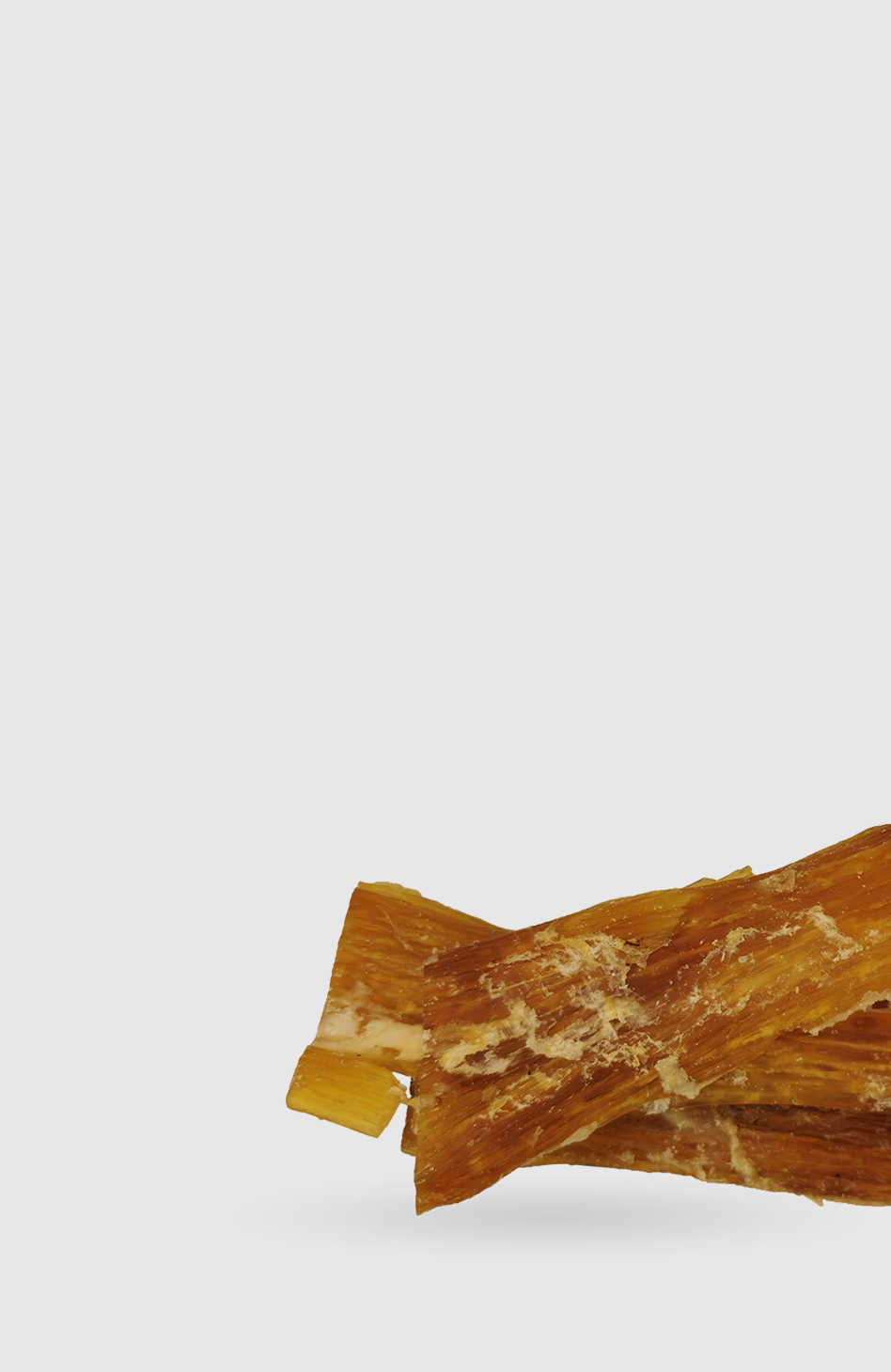
The same applies here: size, chewing habits, and supervision determine whether a particular variety is right for your dog.
- Chew Bones for Puppies: Safe Chew Toys During Teething
- Dental Care for Dogs: An Overview of Routines and Tools
- Chew Bones for Dogs: Benefits and Risks
- Chew Toys for Allergies: Single-Protein and Varieties
Frequently Asked Questions About Dog Chew Bones
What are the healthiest chew toys for dogs?
There is no single "healthiest" chew toy. It should be made from natural ingredients, be appropriate for your dog's size, not be so hard that it damages their teeth, and be factored into their daily food intake.
How often can a dog have a chew bone?
The Animal Welfare League recommends giving them occasionally, since chew toys contain calories. Exactly how often depends on your pet’s size, weight, and food intake. If your pet is overweight or has pre-existing conditions, consult your veterinarian.
Which bones are bad for dogs?
Cooked bones, because they can splinter and injure the intestines. Raw bones can also have sharp edges and should only be given after the dog has become accustomed to them and in moderation.
Can chew toys cause diarrhea or vomiting?
That's possible. The American Animal Hospital Association lists hooves, pig ears, and oxtail as products that can cause vomiting and diarrhea, while bones and foreign objects can also cause an intestinal obstruction. Start with small amounts, and if symptoms persist, take your pet to the vet.
What is werewolf syndrome in dogs?
This is the term the media use to describe an acute behavioral disorder characterized by panic attacks, uncontrolled movements, and, in some cases, seizures. According to a press release from LMU Munich in June 2025, beefhide chew bones are being discussed as a possible trigger. A causal link has not yet been established. If your dog exhibits these symptoms, take him to the vet immediately.
Can puppies have chew bones?
According to the Animal Welfare League, puppies need softer chew toys. Read more in the article “Chew Bones for Puppies.”
The right chew bone should be suited to your dog’s size, chewing habits, and tolerance; it should be made from natural ingredients and not so hard that it damages their teeth. Cooked bones are off-limits; supervision is a must, and if your dog has gastrointestinal issues, take them to the vet. You’ll find a selection in our “Dog Chews” category.
Discover Chew Toys
Five varieties, each from a different animal species, air-dried and free of additives.
Chew Toys