The first clap of thunder rolls, and your dog is suddenly a different animal. He’s trembling all over, huddling in the farthest corner of the bathroom, or cowering under the table. Maybe he’s panting, pacing restlessly back and forth, or literally clinging to your leg. You’d love to help him overcome his fear, but you’re not sure how. That’s exactly what this post is for.
We’ve divided this topic into two distinct phases: immediate help for the moment the storm is already raging, and long-term training to help your dog stay calmer next time. This way, you can quickly find what you need right now.
- Stay calm in the heat of the moment, close the windows and blinds, and provide your dog with a darkened place to retreat to.
- It's okay to comfort someone: You won't make their fear worse as long as you stay calm yourself.
- In the long run, desensitization is the most effective way to combat fear, preferably before the thunderstorm season begins.
- A gentle dietary supplement like CBD can be helpful, but it is not a substitute for exercise or a veterinarian.
This post is not a substitute for a visit to the vet. If your dog is experiencing severe, persistent, or sudden anxiety, please have him examined by a veterinarian and discuss the next steps together.
Here's what you can expect in this post
- Emergency Assistance: What to Do During a Thunderstorm?
- Why are dogs afraid of thunderstorms?
- How can I tell if my dog is afraid?
- How can I calm my dog during a thunderstorm?
- Is it okay to comfort my dog during a thunderstorm?
- How do I create a safe haven?
- Can I help my dog overcome its fear?
- Can I leave my dog alone during a thunderstorm?
- What other resources are available to provide additional support?
- How can CBD help with a fear of thunderstorms?
- FAQ – Frequently Asked Questions About Dogs and Fear of Thunderstorms
- Conclusion
🖼️ INSERT IMAGE: A dog lies trembling and frightened under a table; in the background, a dimly lit living room with a thunderstorm visible through the window (Alt text: Frightened dog hides under the table during a thunderstorm)
Emergency Assistance: What to Do During a Thunderstorm?
Once the thunderstorm is already here, one thing matters most: quickly making your dog feel safe. Shield them from stimuli, radiate calm, and stay close to them. You can take these five immediate steps right away, without having to think twice.
- Close the windows and roller shutters. This muffles the thunder and blocks the bright flashes of lightning from entering the room.
- Provide a quiet place for your dog to retreat to. A darkened corner, the dog crate, or a spot next to you—whatever your dog prefers.
- Stay calm yourself. Dogs pick up on our mood. Speak softly, move in a relaxed manner, and don't make a big deal out of it.
- Gently distract him. Offer a chew toy or play a quiet game, if your dog is willing to play along. Pushing him won't help.
- Don't leave your dog alone. Your presence is often the best way to calm him down in the heat of the moment.
This list is enough for an emergency. If you want to understand why your dog reacts this way and how to make long-term changes, just keep reading.
Dogs perceive low frequencies and changes in air pressure much more sensitively than humans. Many anxious dogs react even before the first audible clap of thunder. Closing windows and shutters and remaining calm noticeably reduces the acute sensory overload—according to the standard recommendation from modern canine behavior science.
Why are dogs afraid of thunderstorms?
Dogs are afraid of thunderstorms because they can’t make sense of the loud, unpredictable sounds. Their hearing is much more sensitive than ours; they sense the drop in air pressure before a storm, and some even feel slight shocks from static electricity. This combination makes a thunderstorm a truly stressful situation for many dogs.
A keen sense of hearing picks up more
Your dog hears frequencies that have long since become inaudible to you. Even a distant rumble that you barely notice can alarm him. Loud thunder right above the house seems all the more overwhelming to him. On top of that, these sounds are irregular and unpredictable. That’s exactly what makes them so threatening.
Air Pressure Drop and Static Charge
Before a thunderstorm, the air pressure drops. Many dogs sense this and become restless even before the first raindrop falls. Added to this is the static electricity in the air. A nervous dog that feels a slight shock on its wet nose is startled even more by it. This intensifies the dog’s anxiety.
Why Anxiety Often Gets Worse
The tricky part is that each additional thunderstorm doesn’t automatically lead to habituation. Often, the opposite happens. The dog becomes more sensitive, and its fear grows with each experience. Contrary to popular belief, many dogs do not get used to thunderstorms on their own. Instead of habituation, sensitization often occurs: the fear response intensifies with each experience. That’s why it’s worth taking action early to break the cycle—in behavioral science, active, early intervention is considered more effective than simply waiting it out.
How can I tell if my dog is afraid?
Fear during a thunderstorm is usually quite obvious: Your dog may tremble, pant, hide, or pace restlessly. Some dogs drool heavily, refuse food, or have dilated pupils. Often, these signs begin even before you notice the storm yourself, because your dog picks up on the early warning signs sooner.
Watch for these typical signs:
- Severe tremors, often affecting the entire body
- Panting, even though it's not warm
- Hiding places, such as in the bathroom or under furniture
- Excessive Salivation
- Pacing nervously and an inability to calm down
- Refusal to eat, even when it comes to favorite treats
- Dilated pupils and a tense gaze
- Clinginess: Your dog is suddenly all over you
Some dogs show only one or two of these signs, while others show several at once. The sooner you recognize them, the faster you can react. By the way, it’s completely normal for your dog to become restless at the very first signs: His body picks up on the storm before your senses do.
🖼️ INSERT IMAGE: Close-up of a panting dog with a tense expression and dilated pupils (Alt text: Panting dog with dilated pupils – signs of fear of thunderstorms)
How can I calm my dog during a thunderstorm?
The best way to calm your dog is to shield him from the stimuli and stay calm yourself. Close the windows and blinds, play soft music or turn on the TV to drown out the thunder, and provide a safe place for him to retreat to. Your own composure is the strongest signal, because your dog looks to you for guidance.
Blocking Out Stimuli
The less your dog notices the thunderstorm, the better. Close the curtains or lower the blinds so the flashes of lightning don’t enter the room. A soft, steady background noise also helps. Calm music or the TV can drown out some of the thunder and provide your dog with something familiar.
Gently steer the conversation in a different direction without being pushy
If your dog is up for it, you can keep him occupied. A chew toy, a stuffed snuffle mat, or a quiet game can help take his mind off the thunderstorm. Chewing has a calming effect on many dogs. Important: Don’t force him to do anything. If your dog would rather hide away, that’s okay, too. Just stay close to him.
Your calmness is contagious
Dogs are keen observers. They can sense right away if you’re tense. So speak softly, move slowly, and don’t rush around. If you treat the thunderstorm as if it were the most normal thing in the world, you’ll put your dog at ease. Dogs are strongly influenced by their owners’ moods: Calm, relaxed body language from their primary caregiver has been shown to have a soothing effect on stressed animals. You can find a detailed overview of gentle methods in our article on natural ways to calm dogs.
Is it okay to comfort my dog during a thunderstorm?
Yes, you can comfort your dog during a thunderstorm. The widespread myth that comforting a dog makes its fear worse is outdated. Fear is an emotion, not a behavior that you reward with attention. So petting your dog, speaking to it calmly, and staying close to it won’t do any harm. There is one important caveat, though: It only works if you stay calm yourself.
Why Comfort Doesn't Make Fear Worse
For a long time, it was believed that comforting a fearful dog would reward that fear and make it worse. Modern dog trainers see things differently today. An emotion like fear cannot be reinforced in the same way as a learned behavior. When your dog is afraid, he is seeking security. By giving him that security, you’re helping him, not harming him.
The key limitation
Comforting your dog will only have a calming effect if you yourself are calm. If you pet your dog frantically while speaking in a tense, high-pitched voice, you’ll be transmitting that very tension to him. Your dog picks up on your state of mind. So stay calm, speak in a deep, slow voice, and show him through your body language that everything is all right. According to current behavioral science, fear—unlike learned behavior—cannot be reinforced through rewards. Comforting your dog is therefore considered safe and even helpful, as long as the caregiver remains calm.
How do I create a safe haven?
A good retreat is quiet, darkened, and filled with familiar scents. Choose a corner far from windows, block out the light, and line it with blankets to muffle sound. Place something inside that smells like you or like home. This creates a little den where your dog will feel safe and secure.
How to Create a Retreat in 4 Steps
-
Select a location
Find a quiet, somewhat dark spot, preferably in the inner part of the room and away from windows. Many dogs like tight spaces, such as under the table or in a dog crate.
-
Dimming
A blanket over the crate or a dark curtain will block out the bright flashes. Darkness has a calming effect on many dogs.
-
Soundproofing
Pad the area with thick blankets and pillows. Soft materials absorb some of the noise.
-
Familiar Smells
Put one of your worn T-shirts or your favorite blanket inside. Familiar smells convey a sense of security.
The safe space should be a place your dog chooses on its own. Never lock your dog in—it should decide for itself whether to go there. It’s best to set up the space before storm season so your dog can get used to it at its own pace.
🖼️ INSERT IMAGE: A cozy, darkened dog crate with blankets and pillows, serving as a safe haven in a quiet corner of the room (Alt text: A darkened dog crate as a safe haven for dogs afraid of thunderstorms)
Can I help my dog overcome its fear?
Yes, you can significantly reduce your dog’s fear, especially through desensitization. This involves gradually getting your dog used to the sounds of thunderstorms in a relaxed setting and associating them with something positive. This takes patience: realistically, it can take weeks or even months. It’s best to start before thunderstorm season, when your dog isn’t under any stress.
Desensitization Step by Step
-
Get a recording
Play soft thunderstorm sounds for your dog, for example, on your cell phone or through a speaker.
-
Start very quietly
Start at a volume level where your dog is still relaxed. If he reacts with fear, it was too loud.
-
Positive Coupling
While the sounds are playing, give your dog treats, let him play quietly, or pet him. This way, your dog will associate thunder with something pleasant.
-
Keep it short
Practice for just 5 to 10 minutes, about once or twice a day. It’s better to keep it short and relaxed than long and overwhelming.
-
Slowly increase the volume
Increase the volume only in very small increments, and only if your dog remains calm.
-
Be patient
It often takes weeks or even months for results to become apparent. Setbacks are normal. If that happens, just take a step back.
Based on feedback from many dog owners in our pack, we know that if you start training in the spring—well before the first summer thunderstorms—you’ll have a much more relaxed season. If you wait until the first clap of thunder to start, it’ll be much harder because your dog will already be stressed out by then.
If your dog has already developed a severe phobia, seek help from an experienced dog trainer. Sometimes it takes an experienced outside perspective to structure the training properly.
Can I leave my dog alone during a thunderstorm?
If possible, don’t leave your anxious dog alone during a thunderstorm. Your presence is often the most effective way to calm them in the heat of the moment. A dog left alone who panics may hurt itself, destroy something, or become even more deeply traumatized by the stress. Therefore, if possible, plan to be with your dog during this time.
If a thunderstorm is unavoidable while you’re away, make sure to set up a safe haven in advance and minimize distractions as much as possible. Lower the blinds and play some soft music. Having a trusted person who can step in is worth its weight in gold. In the long run, training will also help your dog stay calmer even when you’re not around.
What other resources are available to provide additional support?
There are several tools that can help calm your dog, ranging from a safe space to a pressure vest to gentle dietary supplements. None of these replace training, but when used together, they often make everyday life easier. This overview shows you at a glance which tools are best suited for which situations.
An Overview of Resources for Fear of Thunderstorms
| How it works | When is it appropriate? | |
|---|---|---|
| A Safe Haven | A darkened, soundproofed cave provides a sense of security | Always, as a foundation for any emergency situation |
| Compression Vest | Gentle, steady pressure has a calming effect on some dogs | For dogs that respond positively to physical contact |
| Pheromone Diffuser | Releases soothing neurotransmitters into the room | As a supplementary measure during the thunderstorm season |
| Dietary supplement (e.g., CBD) | Can gently promote relaxation | For immediate relief and to support and complement your workout |
| Veterinary Care | Identifies causes and suggests further options | In cases of severe, persistent, or increasing anxiety |
In our experience, this combination works best: a safe haven as a foundation, long-term training, and gentle support—such as CBD—for those acute moments. No single solution can solve the problem on its own—it’s the synergy that makes the difference.
If your pet is experiencing severe or persistent anxiety, talk to your veterinarian about other options. She can assess the situation and work with you to find the right solution.
How can CBD help with a fear of thunderstorms?
CBD can gently help your dog relax without sedating him. It is a natural component of the hemp plant and does not get your dog “high.” As a dietary supplement, it can be a useful addition, but it is not a substitute for training or veterinary care. It works best as one component of a comprehensive approach.
Less Stress as a Way to Promote Relaxation
We developed the Less Stress Herbal Blend for stressed dogs. This herbal blend combines soothing plant-based ingredients and can help your dog relax. It’s a great gentle aid to get your dog through thunderstorm season, especially if you’re working on training at the same time.

Oil and snacks for when you need them right away
In stressful situations, such as a thunderstorm, the form of administration matters. Our CBD oils from nacani can be administered precisely, and the CBD treats are a convenient option that your dog will usually enjoy.
In our experience, during acute stressful situations, it’s best to give a higher dose than the normal daily amount for a short period: about three to four times the usual dose of approximately 0.5 to 1 mg of CBD per kilogram of body weight, spread out throughout the day. You can easily find the exact amount for your dog using our dosage calculator.
Gentle Support for Your Dog
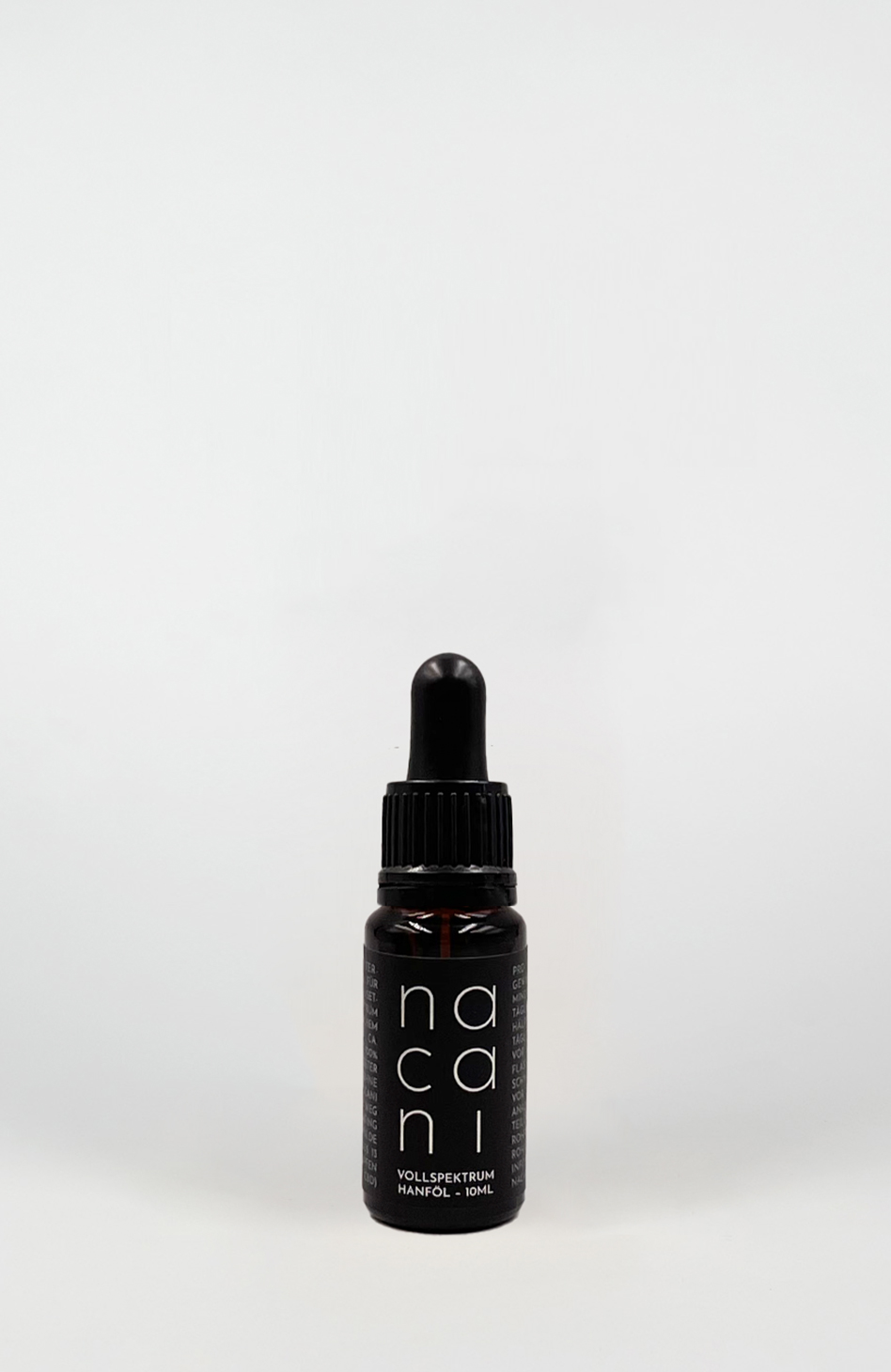

So CBD can help, but that’s all it does. Training remains the most important factor, and if your dog is showing serious signs of anxiety, you should take them to the vet. View the supplement for what it is: a gentle aid on the path to greater calm.
🖼️ INSERT IMAGE: nacani CBD oil and CBD snacks on a table, with a dog lying relaxed next to them (Alt text: nacani CBD oil and CBD snacks as gentle support for fear of thunderstorms)
FAQ – Frequently Asked Questions About Dogs and Fear of Thunderstorms
What helps calm a dog during a thunderstorm?
The best way to calm your dog is to shield them from distractions and stay calm yourself. Close the blinds, play some soft music, and provide a darkened place for them to retreat to. Gently distracting them with a chew treat and your calm presence will also help. A dietary supplement like CBD can provide additional support.
Is it okay to comfort a dog during a thunderstorm?
Yes, you can comfort your dog. The old myth that comforting a dog increases its fear is outdated: Fear is an emotion, not a behavior that can be reinforced with rewards. The only important thing is that you stay calm yourself, because otherwise your tension will be transferred to your dog.
How long does the anti-anxiety training last?
It depends on the dog; realistically, it can take anywhere from weeks to months. Desensitization works best through many short, relaxed practice sessions lasting 5 to 10 minutes. Setbacks are normal. It’s best to start before thunderstorm season, when your dog isn’t under any acute stress.
Does CBD help with fear of thunderstorms?
CBD can gently help your dog relax, but it is not a cure. It works best as one component of a comprehensive approach that includes training and a safe place to retreat. In acute situations, many owners give a higher dose for a short time. You can find the right dose using the dosage calculator.
Is my dog scared on New Year's Eve, too?
Most likely, yes. Fear of the noise from fireworks is very similar to fear of thunderstorms: loud, unpredictable loud bangs and bright flashes of light. The same measures help in both cases—shielding the dog from the stimuli, providing a safe place to retreat, and staying calm. Training is also effective against both triggers.
When should I talk to my veterinarian?
If the anxiety is severe, lasts a long time, or gets worse each time, it’s a good idea to seek veterinary advice. Even if your dog is injured or simply won’t calm down, you should seek help. Your veterinarian can determine the cause and discuss further options with you.
Conclusion
Your dog doesn’t have to be helplessly at the mercy of the next thunderstorm—and neither do you. In the heat of the moment, immediate action is key: shield your dog from stimuli, stay calm, provide a safe place to retreat, and stay close to your dog. Comforting your dog is definitely allowed, as long as you remain calm yourself.
In the long run, desensitization is your most effective tool. It’s best to start training before thunderstorm season begins; be patient and celebrate even small steps of progress. Tools such as a safe space, a pressure vest, or a gentle dietary supplement can also help along the way. Step by step, your dog will become calmer, and both of you will get through the next thunderstorm night more relaxed.
Do something nice for your dog
Gentle support for stressful moments—discover our products for anxious dogs.
Go to the Store